

What an LLM agent is
An LLM agent is an AI system that uses a large language model (LLM) as its reasoning engine to take actions, use tools, and complete complex tasks on behalf of users.How the agent loop works
Unlike traditional chatbots that only respond to user queries, LLM agents can perceive and interact with their environment. They make decisions and take actions in an iterative loop.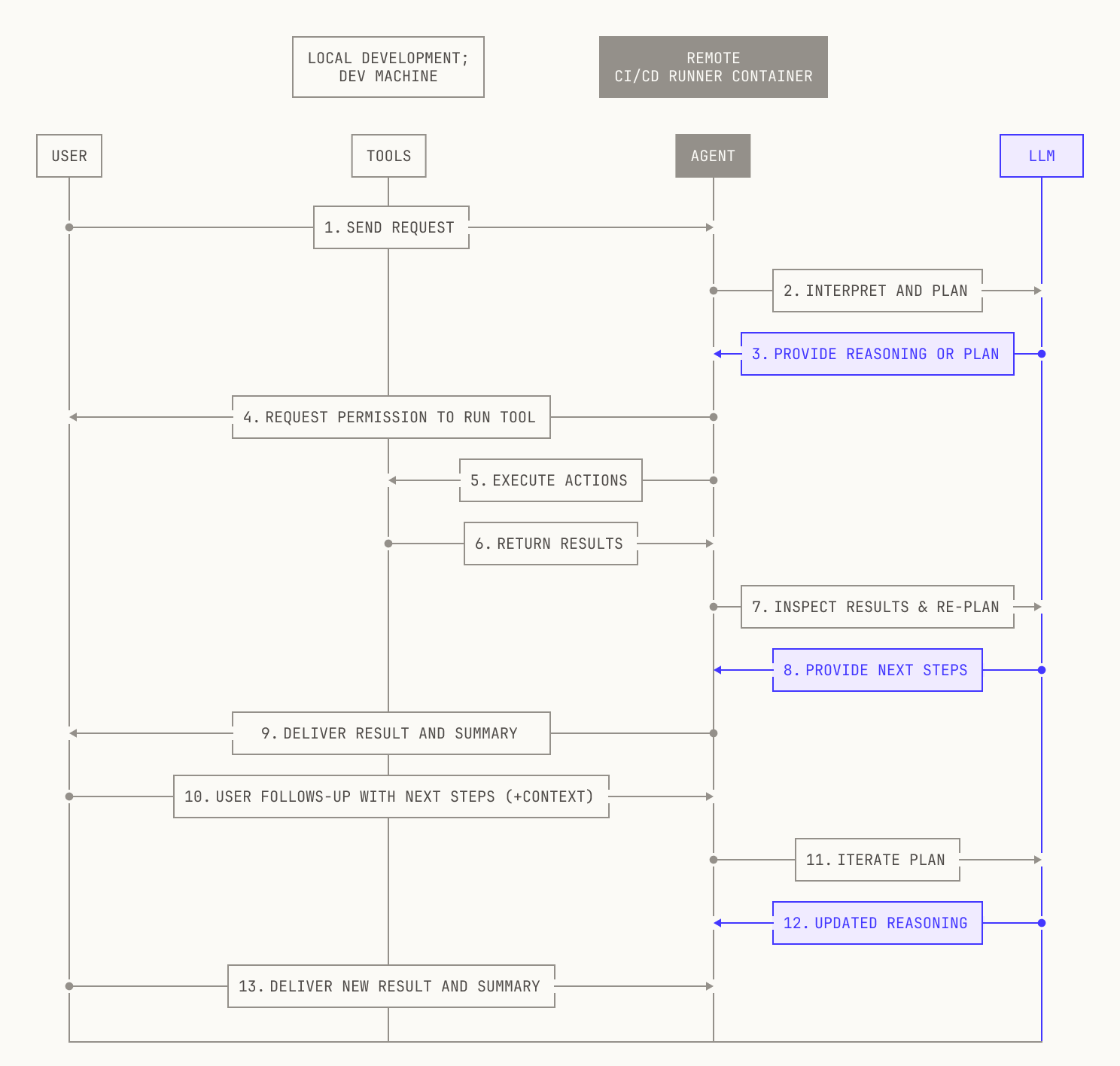
- Interprets a user’s goal and context
- Plans one or more actions
- Executes those actions using tools permitted by the user
- Inspects the results
- Updates its plan and repeats as needed
- Delivers results and a summary to the user
Key components
Model
A model processes information, reasons over the available context, and generates responses that help the agent decide what to do next.Tools
Agents use tools to interact with their environment. In Poolside Agent CLI, tools can include reading and editing files, running commands, inspecting command output, and calling configured MCP servers. The agent decides which tools to request based on your prompt, the available context, and the permissions you allow.Agent loop
The agent loop is the main process that breaks down complex tasks into steps, maintains goals, and adapts based on outcomes. It also manages short-term context, such as conversation history, and applies compression mechanisms to keep the most important information available as the task progresses. As shown in the diagram, the agent can request permission to run tools, inspect the results, and update its plan before delivering a result and summary.Common use cases
- Code development: Writing, debugging, and testing code with access to project files and command-line tools
- Code review: Inspecting changes, identifying risks, and suggesting fixes
- Documentation: Explaining code, generating reference material, and updating docs alongside code changes
- Repository analysis: Exploring unfamiliar codebases and summarizing how systems fit together
- Code migration: Refactoring code or converting source code from one programming language to another